Lithium Batteries
Lithium LiFePO4 batteries: capacity maths, compatibility and safe placement.
A battery turns a solar system into backup power. The right size depends on how many hours you lose power and what you want to keep running.
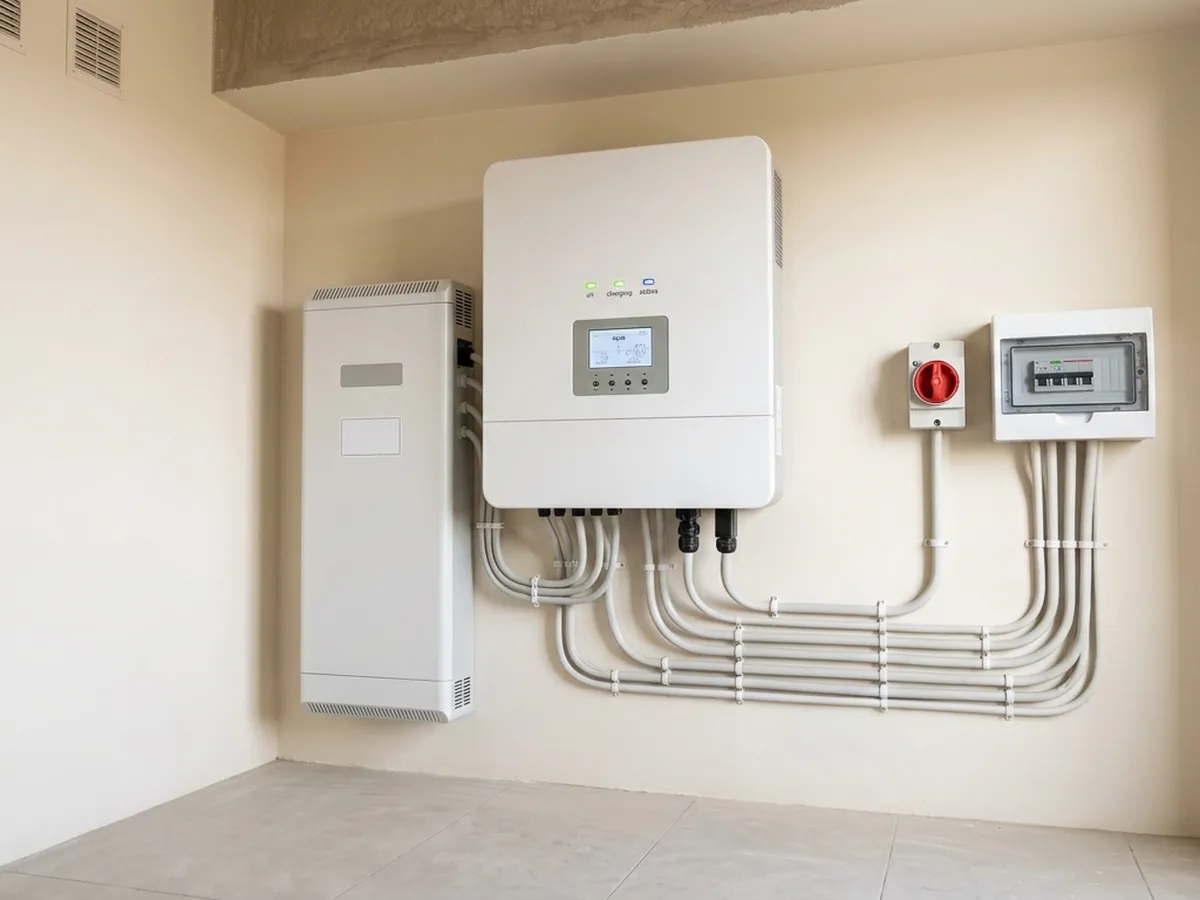
Most solar batteries sold in Karachi are either lithium iron phosphate, called LiFePO4, or tubular lead-acid. Both store energy. They differ in cost, lifespan and how much of the stored energy you can actually use.
Lithium (LiFePO4) costs more to buy. You can use most of its stored energy, it lasts for more charge cycles, it is compact, and it works well in heat. Brands in the market include Phoenix, Pylontech and Dyness.
Tubular lead-acid costs less to buy. You should use only part of its capacity if you want it to last, it is bulky, and it needs regular care and good ventilation. Exide, Phoenix and Hawk are common names.
Prices are per battery. Lithium is quoted by capacity in kWh, and tubular by amp-hours.
| Item | Detail | Price (PKR) |
|---|---|---|
| Lithium 5 kWh, 48 V | Wall or rack mount, built-in BMS | Rs 215,000 to 265,000 |
| Lithium 10 kWh | Two modules or one large unit | Contact us for latest prices |
| Tubular 100 Ah, 12 V | Lead-acid, needs a bank of several | Rs 15,000 to 40,000, by capacity and brand |
| Tubular 200 Ah, 12 V | Lead-acid, needs a bank of several | Rs 15,000 to 40,000, by capacity and brand |
Prices updated on 22 October 2026. Prices change often, so contact us for the latest exact price.
Start with two numbers: how many hours your power usually goes out, and how many watts you want to keep running. Multiply them to get the energy you need. A 1 kW load for 4 hours needs 4 kWh.
Then allow for the part of the battery you cannot use. A lithium battery can be used down to a high depth of discharge, so a 5 kWh unit gives roughly 4.5 kWh of usable energy. A tubular battery should be used less deeply to protect its life, so you need more capacity for the same backup.
Outages in Karachi vary a lot by area. News reports from April 2026 described some neighbourhoods with 2 to 4 hours of load-shedding and others with 15 to 20 hours. Tell us your area and your typical outage, and we size the battery to match.
A quick comparison on the points that decide most purchases.
| Point | Lithium (LiFePO4) | Tubular lead-acid |
|---|---|---|
| Upfront price | Higher | Lower |
| Usable share of capacity | High | Lower, to protect life |
| Size and weight | Compact | Bulky and heavy |
| Upkeep | Very little | Regular checks and water top-up on some types |
| Heat tolerance | Handles heat better | Ages faster in hot rooms |
| Best for | Daily backup and long life | Tight budgets and occasional backup |
Battery problems usually come from mismatches, not from bad products. Check the following.
Since net billing started, surplus power you send to the grid earns little. A battery lets you store daytime solar and use it in the evening, which can be worth more than exporting. If your outages are rare and short, a grid-tied system without a battery may still be the better value. We will tell you honestly which case fits your home.
Short answers. For your own property, send us your electricity bill and roof details.
Ask on WhatsAppLithium costs more upfront but gives more usable energy and a longer life. Tubular costs less and suits tighter budgets. We size both options for your outages so you can compare.
Divide the usable battery energy in kWh by your load in kW. A 4.5 kWh usable battery runs a 1 kW load for about 4.5 hours. Running an air conditioner shortens that sharply.
No. Voltage, chemistry and communication must match. Always confirm the exact inverter and battery pair before you pay.
Lithium needs very little. Tubular lead-acid needs regular checks, clean terminals and good ventilation.
Often yes, if the inverter and the battery model allow it. Ask about expansion before you buy the first unit.
Rules and figures on this page were checked in October 2026. They change, so confirm the current position before you commit money.
Lithium LiFePO4 batteries: capacity maths, compatibility and safe placement.
Tubular batteries: bank sizing, usable capacity and heat care.
How to choose the best solar battery for your inverter, outages and budget.
Inverter types, sizing, brands and what to check before you buy.
System sizes, what a full quote includes and how to size from your bill.
Which system fits a home, apartment, shop, office or factory.
How solar works, what Karachi's climate means, and how to plan a project.
Tell us your area and your usual outage length. We will recommend a battery size and give you a free estimate.