Solar Batteries
Lithium vs tubular batteries, sizing for load-shedding and cost per kWh.
A lithium battery costs more upfront and can cost less per unit stored. The sums below show how to compare it fairly, and what to check before it goes on your wall.
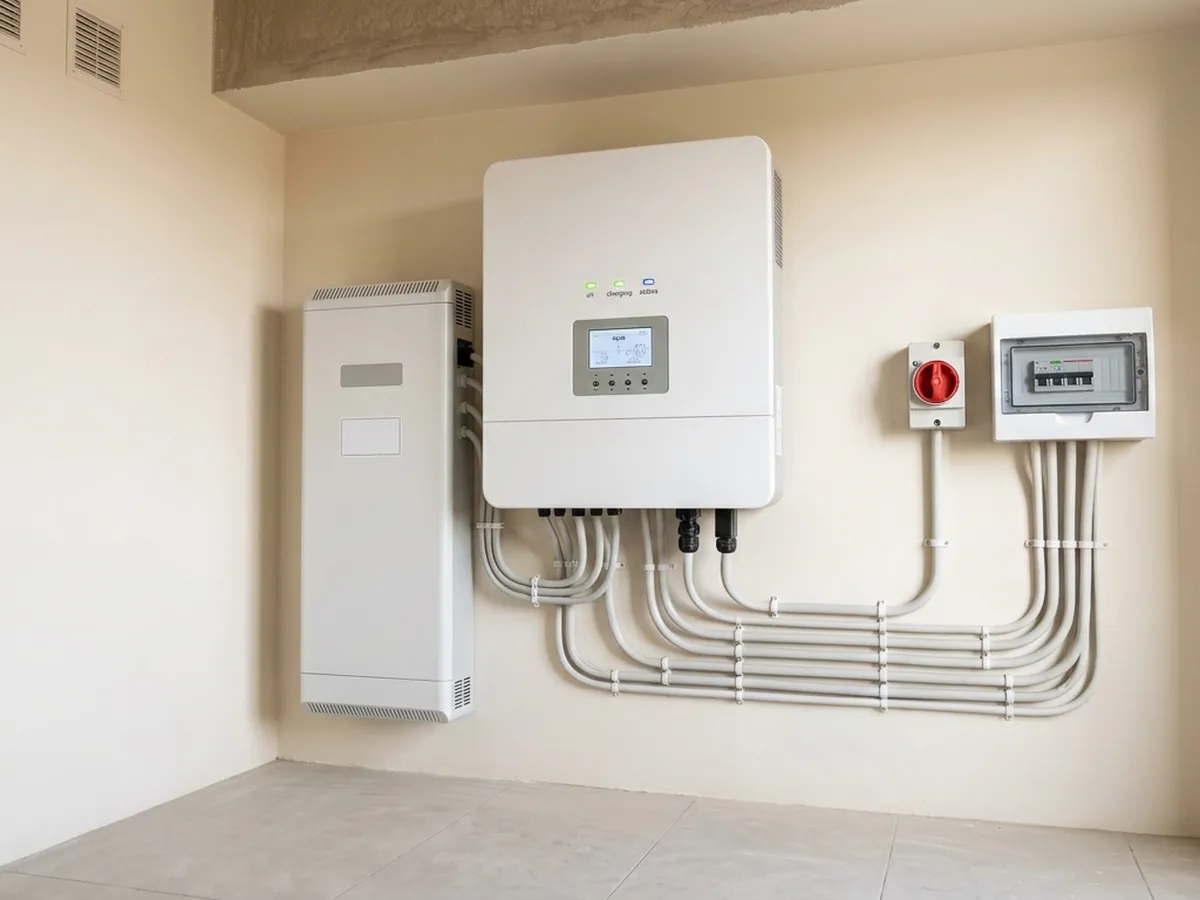
Most lithium batteries sold for home solar use lithium iron phosphate cells, called LiFePO4 or LFP. They come as a single pack with a built-in battery management system, called a BMS, that watches voltage, current and temperature and protects the cells.
Common packs are rated at 48 V, or more exactly about 51.2 V. A pack of 100 Ah at 51.2 V stores about 5.12 kWh. That is why you will see them sold as '5 kWh' batteries. Two packs side by side give about 10 kWh.
Brands sold in Pakistan include Phoenix, Pylontech and Dyness, among others. The brand is less important than whether the exact pack is approved for your inverter.
Prices are per battery and change with the dollar rate and stock.
| Item | Detail | Price (PKR) |
|---|---|---|
| Lithium 5 kWh, 48 V | Wall or rack mount, built-in BMS | Rs 215,000 to 265,000 |
| Lithium 10 kWh | Two modules or one large unit | Contact us for latest prices |
Prices updated on 22 October 2026. Prices change often, so contact us for the latest exact price.
A battery price means little until you divide it. Take the price, divide it by the usable energy, then by the number of full cycles the maker rates it for. The result is the cost of each kWh you store over the battery life.
Here is an illustration with round numbers, not real prices. A battery costing Rs 100,000 with 5 kWh, using 90 percent of it, gives 4.5 kWh of usable energy. If it is rated for 4,000 cycles, it stores 18,000 kWh over its life. That is about Rs 5.6 per kWh stored, before charging cost.
Now run the same sum on a cheaper battery that gives 2.5 kWh usable and 1,200 cycles. The total is 3,000 kWh. At Rs 50,000 the cost is about Rs 16.7 per kWh. The cheaper battery is dearer per unit. Cycle life and usable share decide the result, and you must read them on the datasheet.
Ask the seller for the manufacturer datasheet, not a shop brochure.
| Line | What it means | What to look for |
|---|---|---|
| Nominal energy | Total stored in kWh | Matches the model name |
| Usable energy or DoD | How much you can draw | A high usable share |
| Cycle life | Full charge and discharge cycles | The test conditions are stated |
| Maximum charge and discharge current | How fast it fills and empties | Enough for your loads |
| Operating temperature | Safe range for use | Covers Karachi room heat |
| Communication | CAN or RS485 to the inverter | Your inverter is on the list |
| Warranty | Years and cycles | Who honours it in Pakistan |
The battery and the inverter must speak the same communication language, and the inverter maker keeps a list of approved batteries. A battery not on that list may charge badly or not at all. Ask the seller to confirm the exact inverter and battery pair in writing.
Lithium handles heat better than lead-acid, but it still has limits. Follow these rules.
The battery size comes from your outage hours and your load. A 1 kW load for 4 hours needs 4 kWh. News reports in April 2026 described outages of 15 to 20 hours a day in some Karachi neighbourhoods and 2 to 4 hours in others, so the right size varies by area.
Our main battery guide shows the sizing method, and the tubular battery page covers the lower-cost option.
If a part fails under warranty, we file the claim with the brand and replace the part once the brand approves it. The time depends on the brand's approval. Repairs under warranty are done by the brand. All other after-sales service is done by us.
Short answers. For your own property, send us your electricity bill and roof details.
Ask on WhatsAppIt depends on the brand, the model and the dollar rate on the day. Send us the inverter you have and we will quote an approved battery.
Makers rate it in cycles, and the datasheet states the number and the test conditions. Real life depends on depth of discharge, heat and charge rate.
No. The inverter must support it and the pack must be on the approved list. Confirm the exact pair in writing.
LiFePO4 is considered one of the more stable lithium chemistries, but safety also depends on the BMS, the installation and the placement.
Often yes, if the inverter and the battery model allow it. Ask about expansion before you buy.
We file the claim with the brand and replace the part once the brand approves it. Repairs under warranty are done by the brand, and all other after-sales service is done by us.
Lithium vs tubular batteries, sizing for load-shedding and cost per kWh.
Tubular batteries: bank sizing, usable capacity and heat care.
How a hybrid inverter works, what drives the price and how to size one.
3 kW, 5 kW and 6 kW systems: output, roof area, loads and quote checks.
Tell us your area, your usual outage and the inverter you have. We will recommend a size and give you a free estimate.