Solar panels
Brands, watts, price per watt and what suits Karachi.
Read more →New to solar? This guide explains how a system works, what Karachi's climate means for output, and how to plan a project without paying for things you do not need.
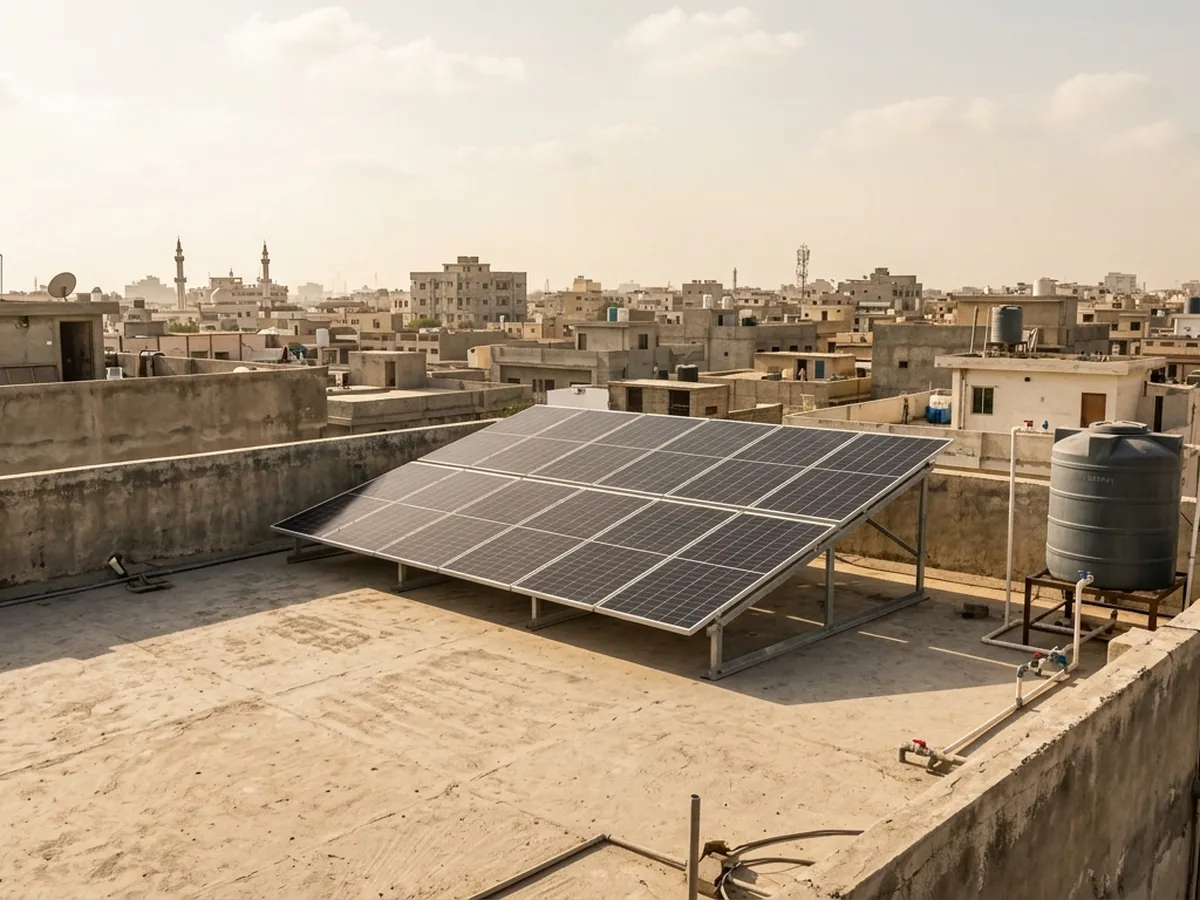
Panels turn sunlight into direct current. An inverter converts that into the alternating current your home uses. The power goes first to your appliances. Whatever is left can charge a battery or flow to the grid.
At night the panels stop. Your home then draws power from the battery, if you have one, or from the grid. This is why a plain grid-tied system gives no backup in an outage, and why batteries and hybrid inverters exist.
Solar quotes use a few terms again and again.
| Term | Meaning |
|---|---|
| kW | A measure of power. A 5 kW system can produce up to 5 kW at its peak. |
| kWh or unit | A measure of energy. Your K-Electric bill counts units, and one unit is one kWh. |
| DC and AC | Panels make DC power. The inverter changes it to AC for your home. |
| On-grid, off-grid, hybrid | Connected to the grid, fully independent, or both with batteries. |
| Sanctioned load | The load approved on your electricity connection. Solar size is tied to it. |
| Net billing | The 2026 system where imports and exports are billed separately. |
Karachi has about 2,949 hours of sunshine a year, an average of 8.1 hours a day. Those are hours of sunshine, not hours of full-strength sun. Panels make most of their power in the middle of the day, so the useful figure is lower than the sunshine hours.
The average daily maximum is about 35.7°C in May and June. Panels lose some output as they heat up, so a hot day is not the best day per panel. Average relative humidity is about 61 percent and peaks near 75 percent in August.
Rainfall averages about 318 mm a year, and most of it falls from late June to September. Rain washes dust off the panels, but cloud cuts output on those days.
Power cuts shape the solar decision in Karachi. News reports in April 2026 described outages of 15 to 20 hours a day in some neighbourhoods, and 2 to 4 hours in others. Where you live changes the answer.
A grid-tied solar system lowers your bill but stops when the grid does. If long cuts are your main problem, you need a hybrid inverter and batteries sized for the hours you lose. The battery guide shows how to size them.
Follow these steps in order and you avoid most mistakes.
Note monthly units for summer and winter, and your sanctioned load.
Lower the bill, get backup during cuts, or both. The goal sets the system type.
On-grid for savings, hybrid for backup. See the solar systems page.
Divide daily units by about 4 to 5 units per kW per day, then check the roof.
Compare at least two quotes line by line, with models and warranties named.
For grid-connected systems, follow the K-Electric steps.
Brands, watts, price per watt and what suits Karachi.
Read more →On-grid, off-grid and hybrid, and how to size one.
Read more →Lithium and tubular, and backup for load-shedding.
Read more →What replaced net metering and how K-Electric applications work.
Read more →The installation process and how to vet a company.
Read more →Which system fits each type of property.
Read more →Short answers. For your own property, send us your electricity bill and roof details.
Ask on WhatsAppYes, at lower output. Panels still make some power in diffuse light, but a cloudy or monsoon day gives much less than a clear one.
No. Panels stop at night. A battery or the grid supplies power then.
Performance warranties on quality panels commonly run 25 years or more, with output declining slowly. Check the datasheet of the panel you choose.
Yes. Dust cuts output. Regular washing, with safe access to the panels, keeps the system performing.
For many homes and businesses, yes, especially when the system is sized for own use. The answer depends on your bill, roof and outages.
Rules and figures on this page were checked in October 2026. They change, so confirm the current position before you commit money.
A six-step solar sizing method with a worked example and worksheet.
Sunshine hours, peak sun hours and what heat and humidity do to solar output in Karachi.
Best tilt and direction for solar panels in Karachi, with the sun angle by season.
System sizes, what a full quote includes and how to size from your bill.
Panel brands, wattage, price per watt and what suits Karachi conditions.
What replaced net metering, the K-Electric process and ways to pay for solar.
The installation process, how to vet a solar company and Karachi site issues.
Send your latest electricity bill and your area in Karachi. We will turn this guide into a real estimate for your property.