Solar Batteries
Lithium vs tubular batteries, sizing for load-shedding and cost per kWh.
The best battery is the one your inverter supports, your outages justify and your budget can carry. Here is how to decide.
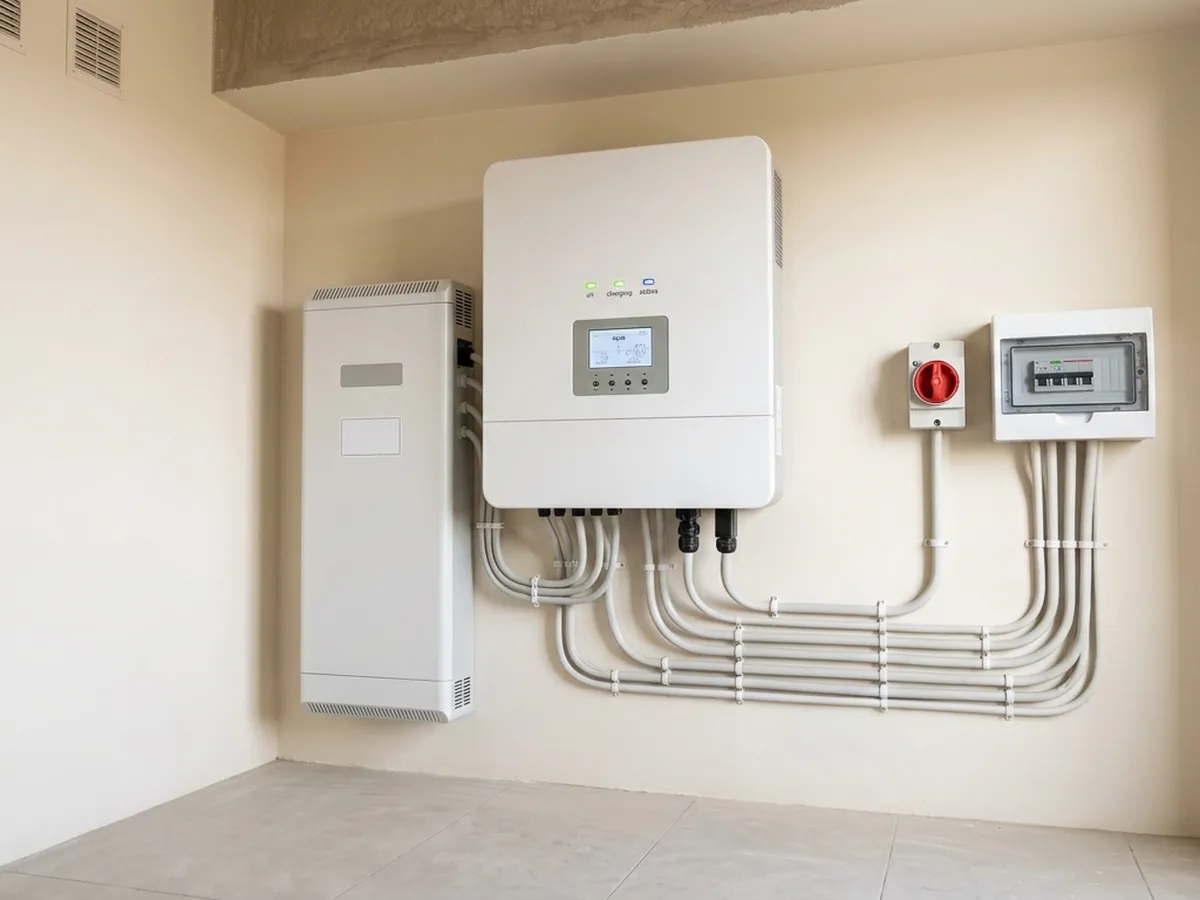
A battery that is best for a daily-cycled home is not best for a shop that has two cuts a month. And the best battery in the world is useless if your inverter cannot talk to it.
So we judge on four things: the inverter, the outage hours, the budget and the place where it will sit. The table below shows how they combine.
We do not publish a ranking of brands. A ranking needs test data we do not have, and the answer changes as models change.
Starting points for the conversation.
| Situation | Battery to discuss | Why |
|---|---|---|
| Long cuts most days | Lithium LiFePO4 | More usable energy and cycles for daily use |
| Occasional cuts, tight budget | Tubular lead-acid | Lower upfront cost, fine for occasional use |
| Limited space on the wall | Lithium | Compact and wall mounted |
| Hot room with little ventilation | Lithium, with a cooler place if possible | Handles heat better, but still needs air |
| Budget inverter at 12 or 24 V | Tubular, matched to the voltage | Lithium may not be on the approved list |
| Plan to expand later | A model that can be added in parallel | Ask the maker for the limit |
Do this before you pay for any battery.
The exact model name and the voltage it supports.
The inverter maker publishes it, and your seller can show it.
Lithium packs talk to the inverter. The cable and the protocol must match.
Ask the seller to write the exact inverter and battery pair on the quote.
The inverter must be set for the battery chemistry. Lead-acid settings can damage lithium.
A cheap battery that wears out in two years can cost more than an expensive one that lasts ten. Divide the price by the usable energy and by the rated cycles, as shown on our lithium battery page, to get the cost of each unit stored.
Add the extras. Tubular banks need water, ventilation and care. Lithium needs a compatible inverter. Both need a proper breaker and cable.
Ask for the warranty in years and in cycles, and ask who honours it. If a warranty claim is needed, we file it with the brand and replace the battery once the brand approves it, and we do the after-sales service apart from brand repairs. Compare this with any other seller you consider.
Not everyone does. With short and rare cuts, a grid-tied system may give better value. News reports in April 2026 described outages of 15 to 20 hours a day in some Karachi neighbourhoods and 2 to 4 hours in others, so the answer depends on your area. Read the battery guide for the sizing method, and the tubular battery page for the lower-cost route.
Short answers. For your own property, send us your electricity bill and roof details.
Ask on WhatsAppIt depends on your inverter, your outages and your budget. Lithium suits daily use, and tubular suits occasional use on a tight budget.
We do not rank brands. Choose one that is on your inverter approved list, with clear warranty terms.
Not always. Compare cost per usable kWh over the rated cycles, and check compatibility.
Check the approved list, match the communication and get the pair written on the quote.
Yes. Send your inverter model, your area and your usual cut hours. We will recommend a battery and give you a free estimate.
Lithium vs tubular batteries, sizing for load-shedding and cost per kWh.
Lithium LiFePO4 batteries: capacity maths, compatibility and safe placement.
Tubular batteries: bank sizing, usable capacity and heat care.
How a hybrid inverter works, what drives the price and how to size one.
Tell us your inverter model, your area and your usual cut length. We will recommend a battery and give you a free estimate.