Home & Commercial
Which system fits a home, apartment, shop, office or factory.
A business that works in the day uses power when the sun is strongest. That is why solar often makes sense for shops, offices and workshops.
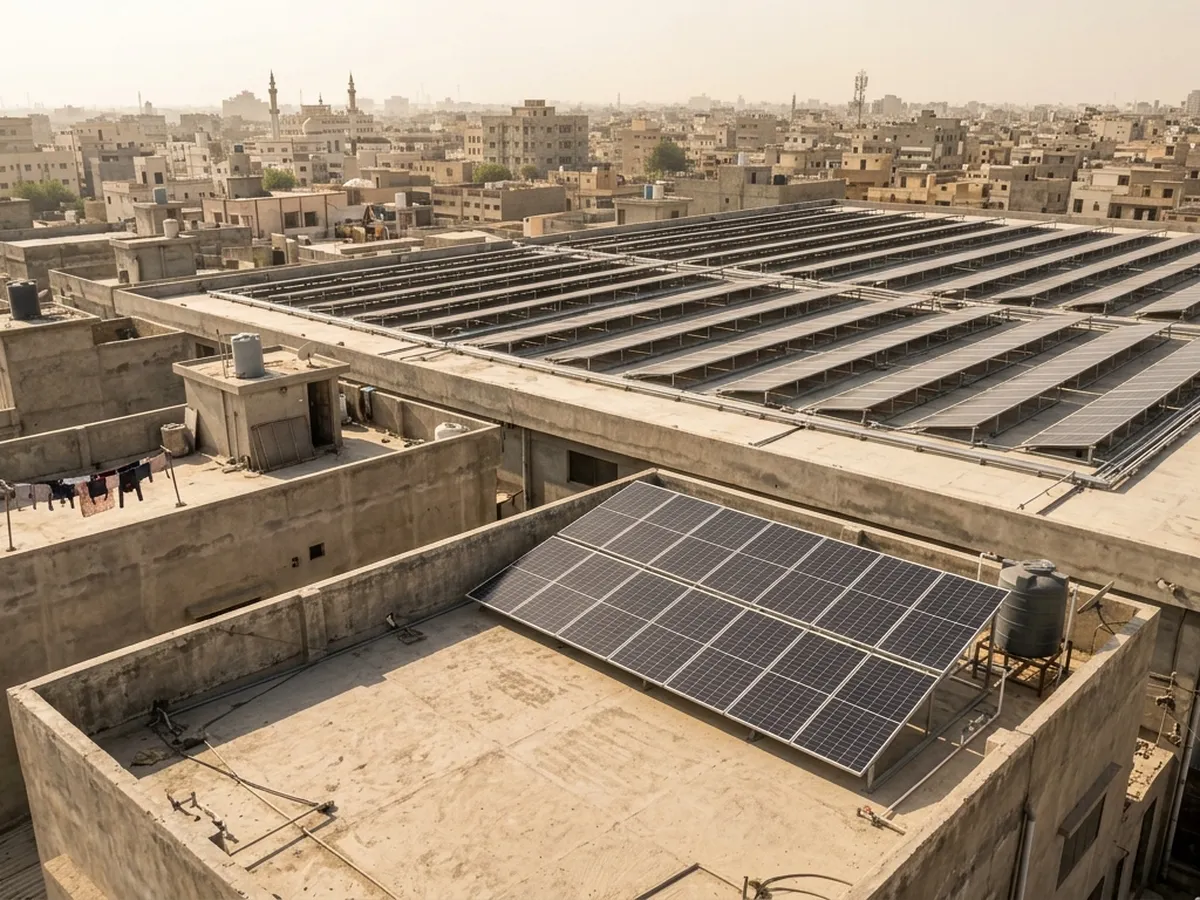
A shop, an office or a workshop that opens in the day uses most of its power while the sun shines. Under net billing, power you use yourself is worth far more than power you export. Reported import rates run at Rs 37 to 55 per unit, while the export rate is roughly Rs 10 to 11. A load that matches the sun is the best case for solar.
A business also has a second problem, which is loadshedding. Karachi has seen long cuts in hot weather, and a business loses sales and stock when power fails. Solar with a battery, or with a generator in the chain, helps with both.
Sizes in common use. The final design depends on your load and your roof.
| Item | Detail | Price (PKR) |
|---|---|---|
| 12 kW system | Small shop or office | Rs 1,625,000 floor-mounted / Rs 1,875,000 raised |
| 15 kW system | Larger shop or clinic | Contact us for latest prices |
| 20 kW system | Small workshop or school | Contact us for latest prices |
Prices updated on 22 October 2026. Prices change often, so contact us for the latest exact price.
These points decide the design before any price is discussed.
| Check | Why it matters | How to find it |
|---|---|---|
| Three-phase or single-phase | Decides the inverter type | Your meter and bill |
| Sanctioned load | Limits the grid-connected size | Your K-Electric bill |
| Daytime load profile | Decides how much you use directly | Bills and a list of machines |
| Roof space and strength | Sets the maximum array and the frame | A site visit |
| Shade and obstacles | Cuts output | Roof photos |
| Backup needs | Decides if you need a battery or generator link | What must never stop |
A grid-connected system needs approval through K-Electric. Applications go through a PPIB pre-qualified vendor. We are not one, so we do not file applications. We design and install the system, and the vendor files the case.
According to the K-Electric net billing guidelines of 13 April 2026, a system above 250 kW also needs a no-objection certificate and a load-flow study. Most shops and offices are far below that size. A licence fee of Rs 1,000 per kW has also been reported. Check the current rules with the vendor before you commit.
A typical commercial job.
Twelve months of bills show the pattern better than one.
We check the roof, the board, the cable routes and the shade.
We name the parts, the layout and the expected output, with every item priced.
A PPIB pre-qualified vendor files any grid application. We supply the design details they need.
We fit the system, test it and hand over the warranty papers.
We do the after-sales service. Warranty repairs are done by the brand.
A quote should state the expected yearly energy and the assumptions behind it. If a seller will not say how many units the system should make, you cannot judge the saving. Treat the number as an estimate, not a guarantee, and ask what it assumes about shade, dust and the tilt.
Larger jobs benefit from a written scope: what is supplied, what is fitted, the dates, the payment stages, the test at handover and the warranty path. For big systems an independent adviser can review the design, as our consultants and EPC guide explains.
We do not offer payment instalments. We confirm payment stages in writing.
Short answers. For your own property, send us your electricity bill and roof details.
Ask on WhatsAppIt often is, because the load runs in the day when the sun is strongest. Send your bills and we will check.
If your supply is three-phase, the inverter should match it. Check your meter and bill.
No. We are not PPIB pre-qualified. A PPIB pre-qualified vendor files it. We design and install.
Tell us the size and the site. We will say plainly whether it is within what we do.
Not always. A battery helps if you must keep running in a cut. Many daytime businesses run without one.
Rules and figures on this page were checked in October 2026. They change, so confirm the current position before you commit money.
Which system fits a home, apartment, shop, office or factory.
8 kW to 20 kW systems: panel counts, roof area, three-phase design and approvals.
What EPC means, when a solar project needs a consultant and what a contract should cover.
A checklist of K-Electric documents, time limits and common rejection reasons.
Send twelve months of bills and a roof photo. We will check the fit and give a free estimate.