Installation
The installation process, how to vet a solar company and Karachi site issues.
Small home systems rarely need a consultant. Larger projects often do. This page explains the terms and the choices.
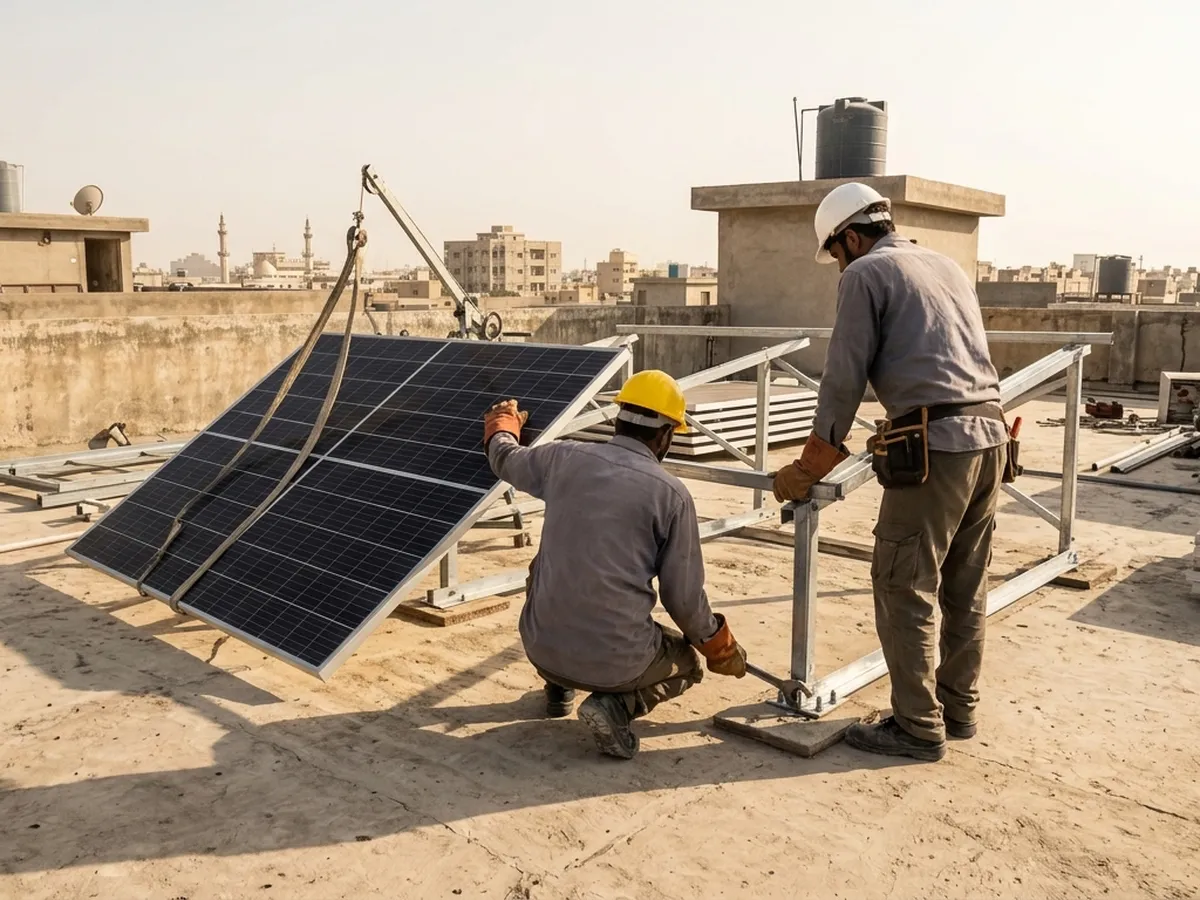
EPC stands for engineering, procurement and construction. An EPC contractor designs the system, buys the equipment and builds it, under one contract. You deal with one company, and that company carries the responsibility for the result.
A solar consultant is different. A consultant advises you but does not usually build. The role may include checking the design, writing the specification, reviewing quotes and inspecting the work. The idea is to have someone on your side who does not profit from the equipment you buy.
The roles often overlap in small projects.
| Role | What they do | Usual fit |
|---|---|---|
| Installer | Sells, fits and supports a system | Homes and small businesses |
| EPC contractor | Designs, procures and builds under one contract | Larger commercial and industrial projects |
| Independent consultant | Advises, reviews design and inspects | Large or complex projects, or buyers who want a second opinion |
| Grid vendor | Files the K-Electric application as a PPIB pre-qualified vendor | Any grid-connected system |
We are an installer. We sell and install systems ourselves, give itemised quotes, do site visits and hand over warranty papers. We do not present ourselves as an independent consultant, and we hold no PPIB pre-qualification, so we do not file K-Electric applications.
That means a conflict of interest we should name. When we quote, we are also the seller. If your project is large, a second opinion from someone who is not selling anything is worth considering.
There is no fixed size, but these situations point to one.
Ask for these in writing, whoever the contractor is.
Every part supplied and every task done, with the brand and model of each major item.
Tied to delivery and to tests, not to dates alone.
Start, delivery and handover dates, and what happens when they slip.
Who handles which permission. With the grid, the application goes through a PPIB pre-qualified vendor.
A defined test at handover. For example, string voltages and currents recorded, inverter settings checked and output compared with the design.
As-built drawings, datasheets, warranty papers with serial numbers and a maintenance guide.
Who files a claim, who repairs and how long approval can take.
A promise of a certain yearly output is only as good as its definition. Ask how it is measured, over what period, with what allowance for cloud, dust and grid cuts, and what remedy applies if the system falls short. A guarantee with no remedy is a sales line.
Ask for the bidder's own paperwork, not a template. What approvals and registrations does it hold, and can you check them with the issuer? What did it build before, and can you visit the site? Who will be on your roof, and are they its own staff?
We have no past projects to show you yet, and we will not invent any. We would sooner tell you that than let you find out later.
Short answers. For your own property, send us your electricity bill and roof details.
Ask on WhatsAppEngineering, procurement and construction. One contractor designs, buys and builds the system under one contract.
Usually not. A clear itemised quote and a site visit are enough for most homes. A consultant makes sense for large or complex projects.
No. We are an installer. We sell and install systems ourselves.
A PPIB pre-qualified vendor. Check whether your contractor is one or works with one.
Recorded string voltages and currents, inverter settings, protection checks and output compared with the design.
The installation process, how to vet a solar company and Karachi site issues.
Commercial solar in Karachi: daytime load, three-phase supply, approvals and contracts.
A ten-point checklist for choosing a solar company in Karachi, applied honestly.
8 kW to 20 kW systems: panel counts, roof area, three-phase design and approvals.
Tell us the size and the site. We will say plainly whether it is within what we do and help you list what to ask.