Solar Inverters
Inverter types, sizing, brands and what to check before you buy.
One type switches off in a power cut. One ignores the grid altogether. A third mixes both. Here is how to choose between them.
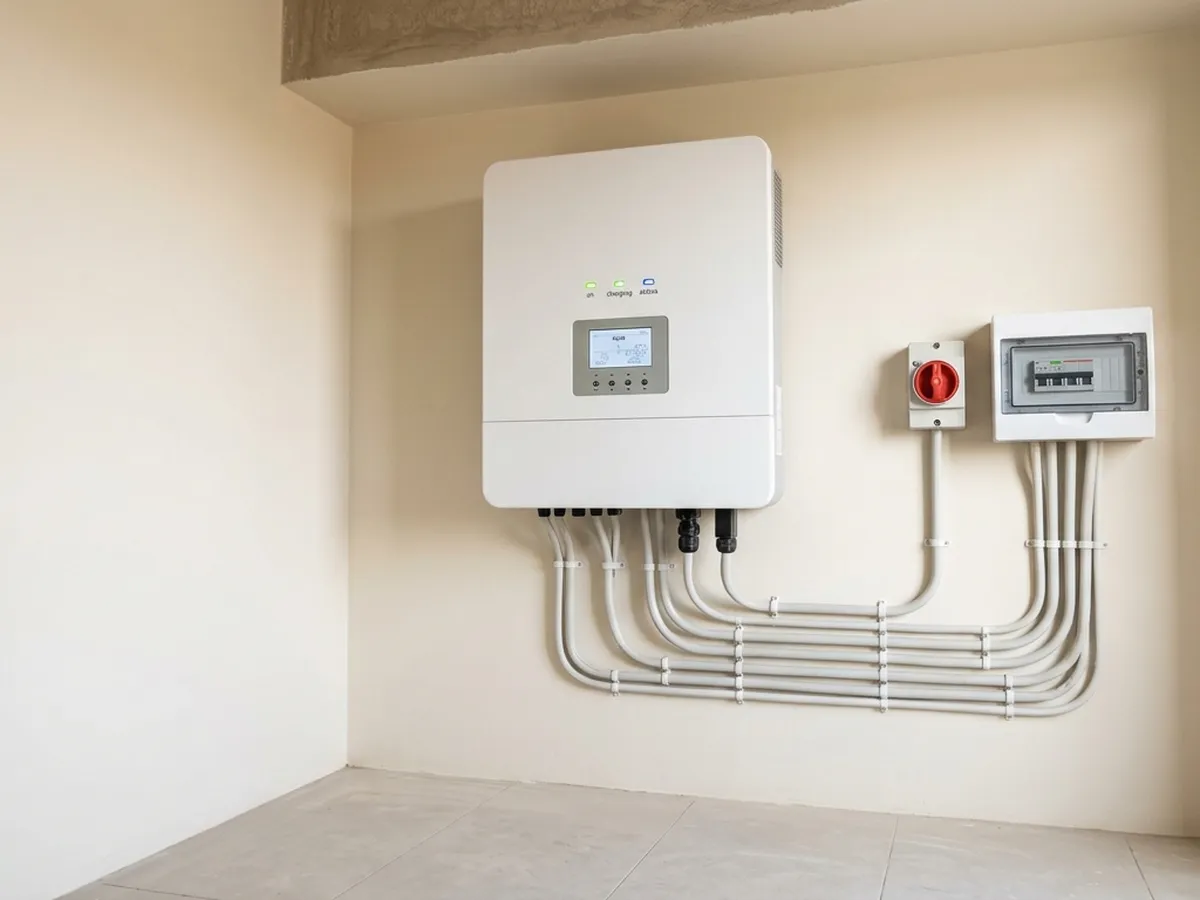
An on-grid inverter, also called a grid-tied inverter, works only while the grid is live. When K-Electric supply fails, it shuts down by design. This protects line workers from power flowing back into a dead line.
An off-grid inverter runs the house from panels and batteries and ignores the grid. It works in a cut, because it does not depend on the grid at all.
A hybrid inverter does both. It uses solar first, charges batteries, and keeps the backup line running when the grid fails. Most Karachi homes with long outages choose this type.
General tendencies. Exact figures come from the datasheet of the model.
| Point | On-grid | Off-grid | Hybrid |
|---|---|---|---|
| Backup in a cut | None | Yes, from batteries | Yes, from batteries |
| Needs a battery | No | Yes | Optional but needed for backup |
| Upfront cost | Lowest | Medium to high | Highest of the three |
| Grid export | Yes, if approved | No | Yes, if the model allows |
| Maintenance | Least | Battery care | Battery care |
| Best for | Short cuts, daytime users | Places with no grid | Long cuts, homes with ACs |
Under net billing, exported power earns far less than the power you use yourself. News reports put the export rate at roughly Rs 10 to 11 per unit, and the avoided grid price is much higher. That favours systems that use their own power.
An on-grid system exports when you are not at home and imports when you are. A hybrid with a battery can store the surplus and use it in the evening. An off-grid system has no export at all.
So the right type depends on when you use power, not only on cuts. A shop that is busy in daytime suits on-grid. A home that is busy in the evening may gain from a battery.
Answer these in order.
Most on-grid inverters cannot control batteries. If you may want backup in future, choose a hybrid inverter now, even if you start without a battery. It costs more at the start, but it avoids replacing the inverter later. The hybrid inverter guide lists the features to check.
Never connect any inverter to the grid without approval. K-Electric applications go through a PPIB pre-qualified vendor. We are not one, so we install the system and you apply through a vendor. Our K-Electric guide shows the steps, and our net billing guide explains the new rules.
Short answers. For your own property, send us your electricity bill and roof details.
Ask on WhatsAppOn-grid inverters work with the grid and shut down in a cut. Off-grid inverters run on panels and batteries and ignore the grid.
On-grid is usually cheaper because it needs no battery. Off-grid needs a battery bank sized for every night.
It combines both. It uses solar, charges batteries and works with the grid, and it keeps a backup line running in a cut.
Usually not. Off-grid inverters are designed to run on their own. Ask for the datasheet if you want a grid connection.
Choose by cut hours and by when you use power. Send us your bill and we will advise you.
Inverter types, sizing, brands and what to check before you buy.
How a hybrid inverter works, what drives the price and how to size one.
A decision guide to the best inverter type and brand for your home or shop.
What replaced net metering, the K-Electric process and ways to pay for solar.
Tell us your area and your usual cut hours. We will recommend a type and give you a free estimate.